
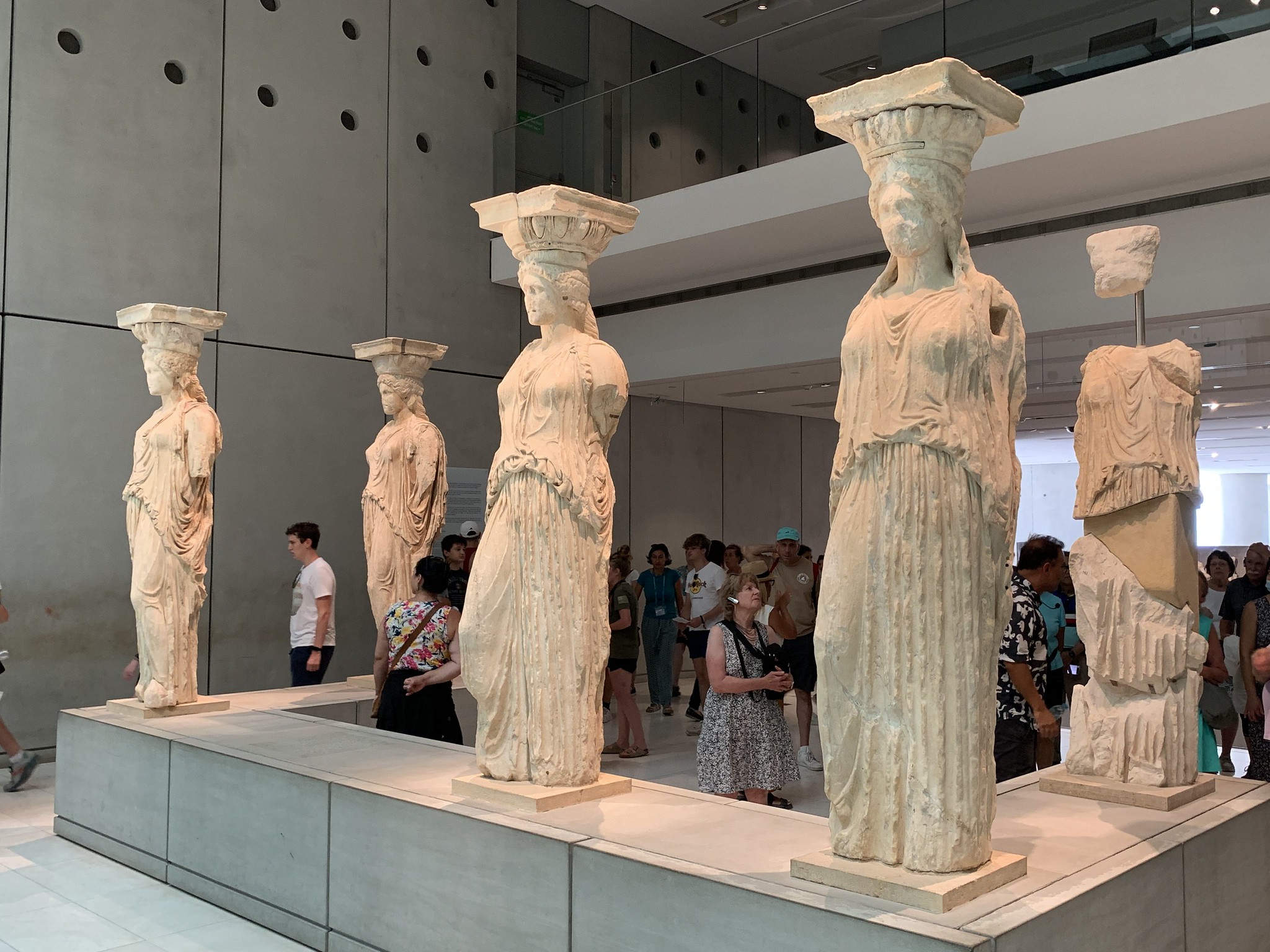
Athens, the cradle of Western civilization, boasts countless treasures, but none quite as captivating as the Acropolis Museum. This architectural marvel stands at the foot of the iconic Acropolis hill and houses millennia-old artifacts that tell tales of Greece’s glorious past.
Inaugurated in 2009, the museum quickly became a must-visit destination for history buffs, art enthusiasts, and curious travelers. Its sleek, modern design by Bernard Tschumi Architects contrasts the ancient wonders within, creating an immersive experience that bridges past and present.
Upon entering, visitors are greeted by a vast, sun-drenched gallery. The ground floor’s glass panels reveal excavations below, offering glimpses into the foundations of ancient Athens. This transparency sets the tone for the museum’s commitment to unveiling history.
Ascending to the first floor, one encounters the “Gallery of the Slopes of the Acropolis.” Here, artifacts from the sanctuaries that once adorned the Acropolis slopes come to life. Votives, everyday objects, and sculptures vividly depict daily life in ancient Athens.
The journey continues to the Archaic Gallery, where larger-than-life kouroi (statues of young men) and korai (statues of young women) stand proudly. These figures, some still bearing traces of vibrant paint, challenge the common misconception of classical sculptures being pure white. Their enigmatic smiles and intricate detailing captivate, hinting at the artistic prowess of their creators.
However, the crown jewel awaits on the third floor: the Parthenon Gallery. This space is a masterstroke of curation, aligning perfectly with the ancient temple visible through panoramic windows. The frieze that once adorned the Parthenon is displayed here, its 160-meter length recreated through a blend of original marble pieces and casts. The narrative depicted – the Panathenaic procession – comes alive as visitors circle the gallery, mirroring the ancient Athenians’ path.
Nearby, the colossal figures of the Parthenon’s pediments command attention. Though fragmented, their power remains undiminished. The museum’s thoughtful placement allows visitors to admire these sculptures up close, appreciating details often missed from afar.
The museum’s multimedia installations and informative plaques enrich the experience, offering context without overwhelming. For those seeking deeper insights, guided tours unravel the stories behind each artifact, bringing ancient myths and historical events into sharp focus.
The Acropolis Museum doesn’t shy away from controversy, either. An entire section is dedicated to the Parthenon Marbles, also known as the Elgin Marbles, currently housed in the British Museum. This exhibit sparks important conversations about cultural heritage, repatriation, and the preservation of antiquities.
As the day wanes, the museum takes on a different character. The Acropolis, illuminated against the darkening sky, provides a breathtaking backdrop for those lingering in the museum’s café or restaurant. Here, traditional Greek flavors mingle with contemporary culinary artistry, offering a feast for the senses.
For anyone planning a visit to Athens, the Acropolis Museum is indispensable. It not only complements the Acropolis itself but also deepens one’s appreciation for the monumental achievements of ancient Greece. In this temple of history, every stone, every sculpture, and every fragment tells a story – a narrative of human ingenuity, artistic brilliance, and the timeless quest for beauty and knowledge.